

Winslow is a Giant Madagascar Day Gecko who was surrendered as a baby. His original family got him for their kids, but since day geckos are super skittish and not easy to handle, they lost interest. When he was surrendered, he was in rough shape—missing his tail and parts of his skin, as well as refusing to eat. After lots of care and patience, Winslow made an incredible turnaround and is now a rare exception for his species, he is friendly and even handleable!

Mojave was rescued locally in Merced from someone who kept him in a tiny 10-gallon tank for most of his life and only fed him once a month, leaving him very underweight. Luckily, his rescuer donated him along with a proper 40-gallon setup. Leopard geckos are one of the few gecko species with eyelids, helping keep debris out of their eyes since they are terrestrial diggers rather than the classic sticky-toed climbers.

Taz the Red Ackie Monitor is a lizard native to the rocky savannas and grasslands of northern Australia. Red Ackie Monitors are intelligent, active lizards known for their bold personalities and coloration. While smaller than many monitor species, they’re big on curiosity and energy, using their claws to dig and explore. Taz came to us through a rehome adoption, after his previous family could no longer care for him.
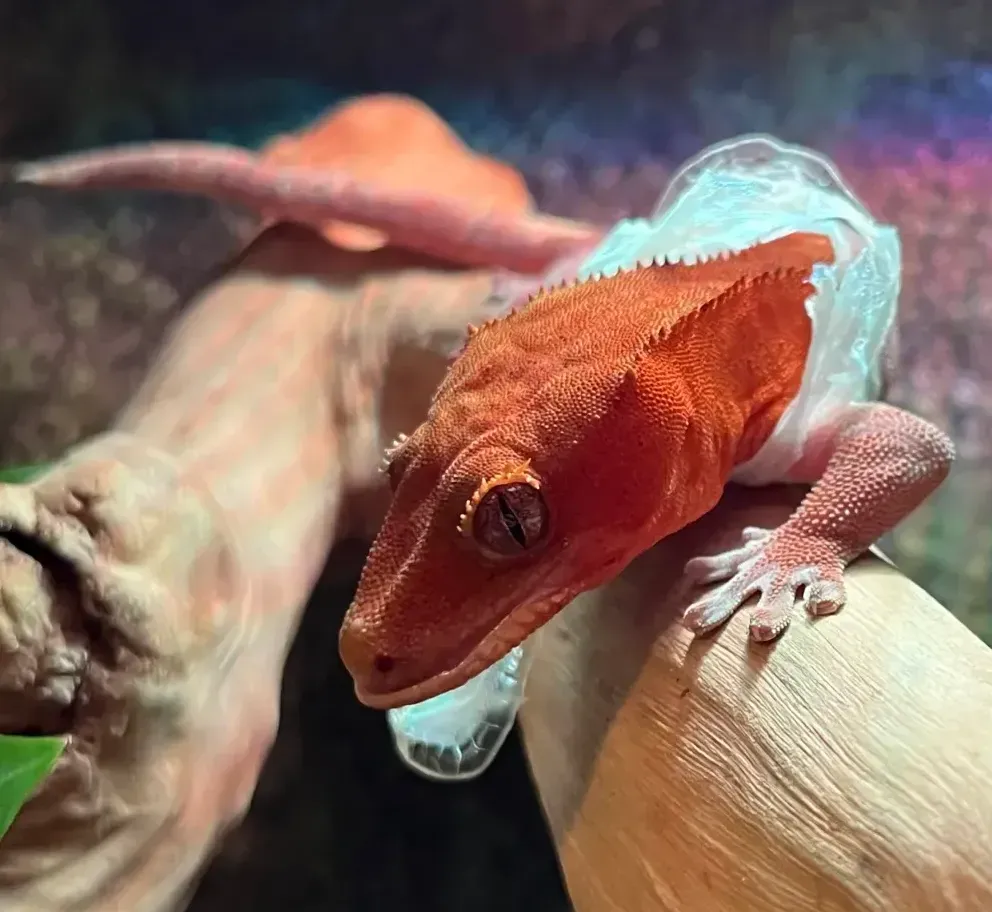
Ducky
is a Crested Gecko that was shipped across the USA after getting into an accident at a pet store in another state. Ducky unfortunately had his head closed in an enclosure door, causing his pupil to burst and his lip to tear. Crested Geckos are a species of gecko native to New Caledonia, a group of islands in the southwest Pacific. They are one of the only gecko species that can completely regenerate their tail only once—if they lose it, it never grows back.

Topaz is a 3-year-old Brazilian Rainbow Boa. These boas have microscopic ridges on their scales that refract light, creating their signature colors. They are semi-arboreal, meaning they spend time both on the ground and in trees, especially when young like Topaz. Unlike many other snakes, they give birth to live young instead of laying eggs.
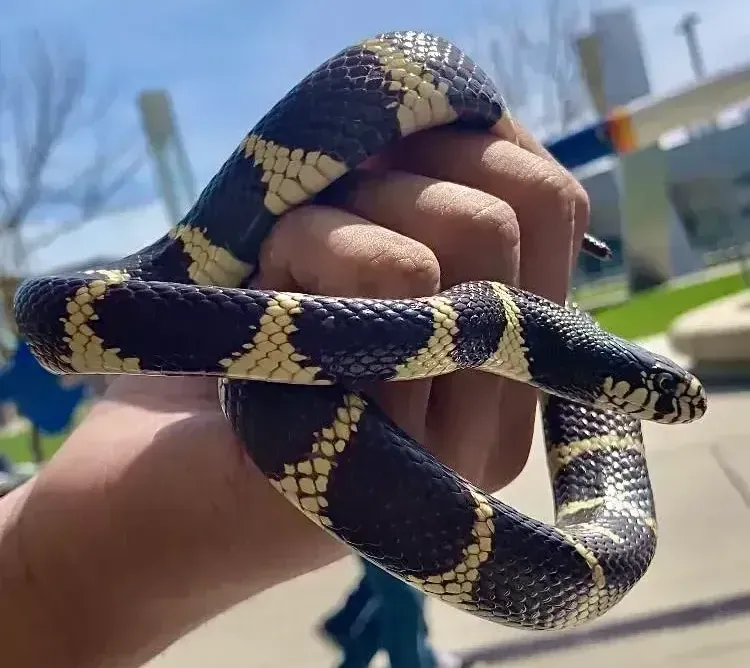
Rudolph is our rescue king snake who had a rough start in life. She spent most of her time crammed in a 10-gallon tank, even after growing to 3 feet long. The cramped space and poor conditions led to a scab on her nose from constant "glass surfing" and an upper respiratory infection (URI). There was a time we weren’t sure she’d pull through, but after several vet visits and a lot of care, she made it. Sadly, the damage to her lungs was permanent. As for her name? Well, every time she used to shed, her nose scab would bleed, leaving her with a bright red nose—just like the reindeer.

Solaire is a wild morph Ball Python, a species known for their calm temperament and ability to curl into a tight ball when threatened, which is how they got their name. Ball Pythons are one of the most popular pet snake species!

Meet our 3 Sulcata tortoises Oogway, Kenya, and Zulu! These African grassland tortoises are the 3rd largest tortoise in the world weighing in at over 150 pounds! Sadly, in the wild they are classified as Vulnerable by the IUCN due to habitat loss and illegal poaching for the pet trade. Our rescues have a condition called pyramiding, which causes abnormal, raised growth on their shells. This condition is typically the result of poor husbandry in their early years.
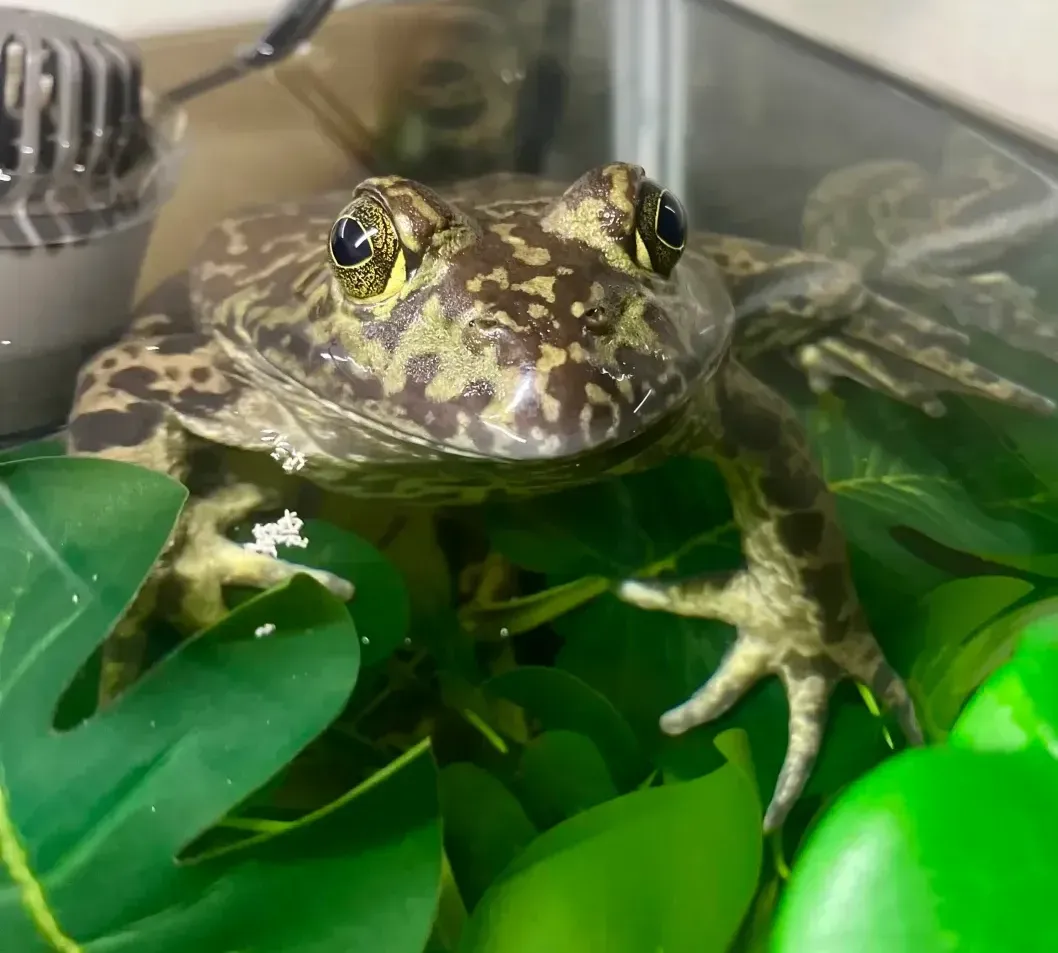
Blob is an American Bullfrog, a locally invasive species here in Merced, California, and many other parts of the state. You can usually find them in Little Lake here on campus. They are considered invasive because they outcompete native frog species, reproduce rapidly, and have no natural predators in many areas. On top of that, they’ll eat just about anything that fits in their mouth—including mice, rats, birds, and even other frogs!

Pogo and Tory are a breeding pair of Ranitomeya fantastica also known as Nominal Dart Frogs. from an old high school frog raising project. This species of dart frog are known for their strikingly small size, often being referred to as "Thumbnail Dart Frogs". They are expert climbers despite their small size, and the males are known to carry their live young tadpoles on their back during the early stages of life.

Tic, Tac, and Toe are three Brazilian Yellow-Head Dart Frogs. Dart frogs are not poisonous in captivity because their toxicity comes from their wild diet of ants and mites that contain toxic alkaloids. In captivity, where they eat non-toxic insects like fruit flies and they lose their ability to produce poison. Dart frogs are known for their bright warning colors, a defense strategy called aposematism. Unlike most frogs, many dart frog species are attentive parents, with some carrying their tadpoles on their backs to safe water sources.

Mocha is an Arizona Blonde Tarantula who was rescued from a situation where she was kept in the same enclosure as a Ball Python, separated only by a divider. Now, she has a proper setup all to herself, where she spends most of her time happily digging. AZ Blonde Tarantulas are known for their calm temperament and rarely bite—instead, they defend themselves by kicking tiny, irritating hairs from their abdomen, similar to a porcupine’s defense. They are also incredibly long-lived, with females reaching up to 20 years or more!

Cosmos is a juvenile Green Bottle Blue also known as a GBB Tarantula, a species known for its vibrant colors and heavy webbing. As adults, they have striking metallic blue legs, a green carapace, and an orange abdomen, making them one of the most colorful tarantulas. GBBs are also extreme webbers, covering their entire enclosure in thick layers of silk.
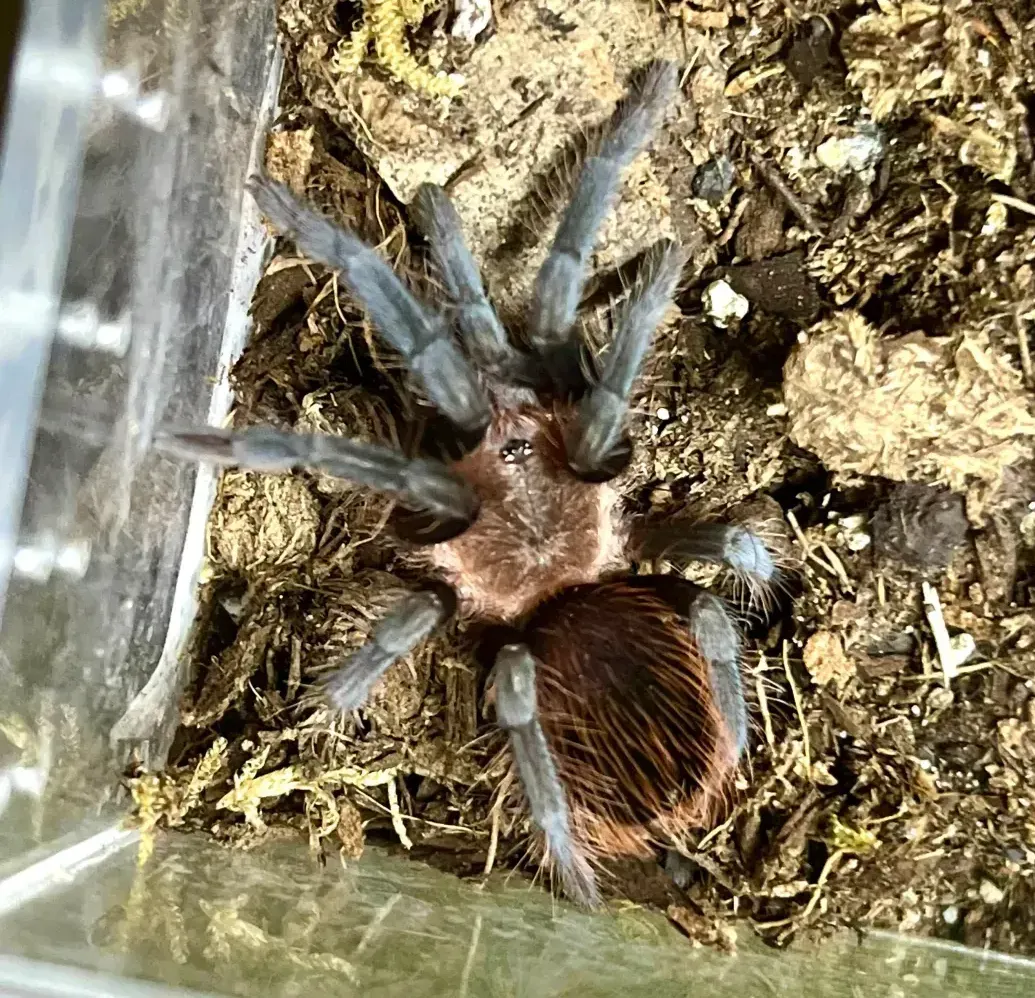
Rojo is a juvenile Red Rump Tarantula! Like many New World tarantulas, they defend themselves by kicking off irritating urticating hairs rather than biting. They are burrowers by nature, often digging tunnels to hide in, especially as juveniles.

Cubaris Panda Isopods
Panda Isopods are an adorable type of terrestrial isopod known for their distinctive black-and-white coloration, resembling a panda. They are a popular choice for bioactive terrariums due to their role in breaking down waste and aerating soil. Unlike some other isopod species, they prefer higher humidity and plenty of hiding spots. They reproduce by carrying their eggs in a special pouch called a marsupium, similar to crustaceans.

Dairy Cow Isopod
Dairy Cow Isopods are a large, hardy species of terrestrial isopod named for their black-and-white spotted pattern, resembling a dairy cow. They are highly active and one of the most prolific breeders among isopods. Dairy Cows are known for their strong appetite and will quickly break down waste, mold, decaying plant matter and even other invertebrates. Unlike some isopods that prefer to hide, they are bold and often seen roaming their enclosure.

Magic Potion Isopod
Magic Potion Isopods are a variety of Armadillidium vulgare, meaning they have the ability to roll into a ball for protection. Unlike some isopods that thrive in high humidity, Magic Potions prefer a balance of moisture and dry areas in their enclosure. They are slower breeders compared to species like Dairy Cow Isopods, making them a bit more sought after.

Papaya isopod
Papaya Isopods are a part of the Cubaris genus, they prefer high humidity and plenty of leaf litter. Papaya Isopods reproduce more slowly and require stable conditions to thrive. They are also burrowers, often hiding under cork bark and digging into substrate.

Phil, our Asian Forest Scorpion is native to forests of Southeast Asia. He’s one of the largest scorpion species in the world. Phil is a “look, don’t touch” ambassador, helping people overcome fears and misconceptions about scorpions and other invertebrates. While he does have venom, it is mild and mainly used to subdue prey, posing no serious threat to humans when left undisturbed.

Hank and Harry are our two Madagascar Hissing Cockroaches, a species known for their unique ability to "hiss" as a form of communication. Unlike most insects, they create sound by forcing air through small openings (spiracles) on their abdomen instead of rubbing body parts together. They have different hisses for mating, territorial disputes, and warning off predators.
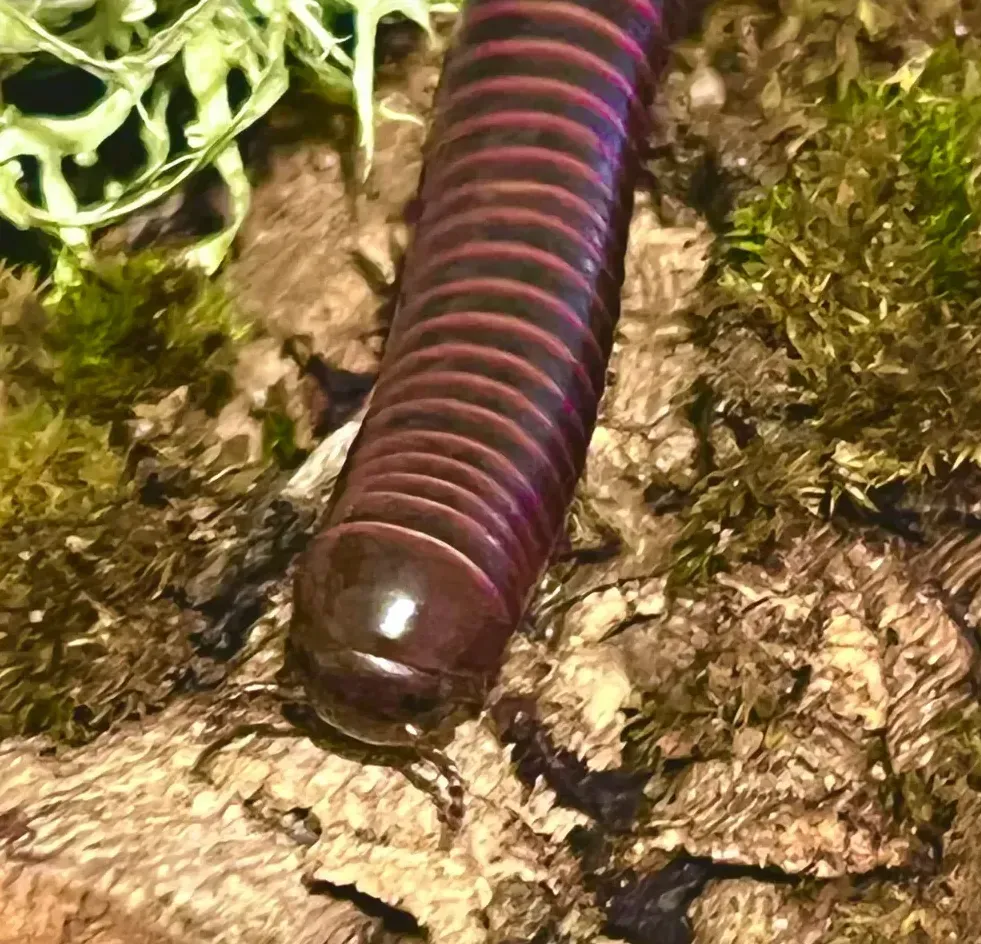
The Tylobolus Millipede is a genus of millipedes in the order Spirobolida with seven known species found in western North America. All species of Tylobolus occur on the Pacific Slope of North America, ranging from Washington state to Baja California, Mexico. Only one species occurs east of the Sierra Nevada mountains.